
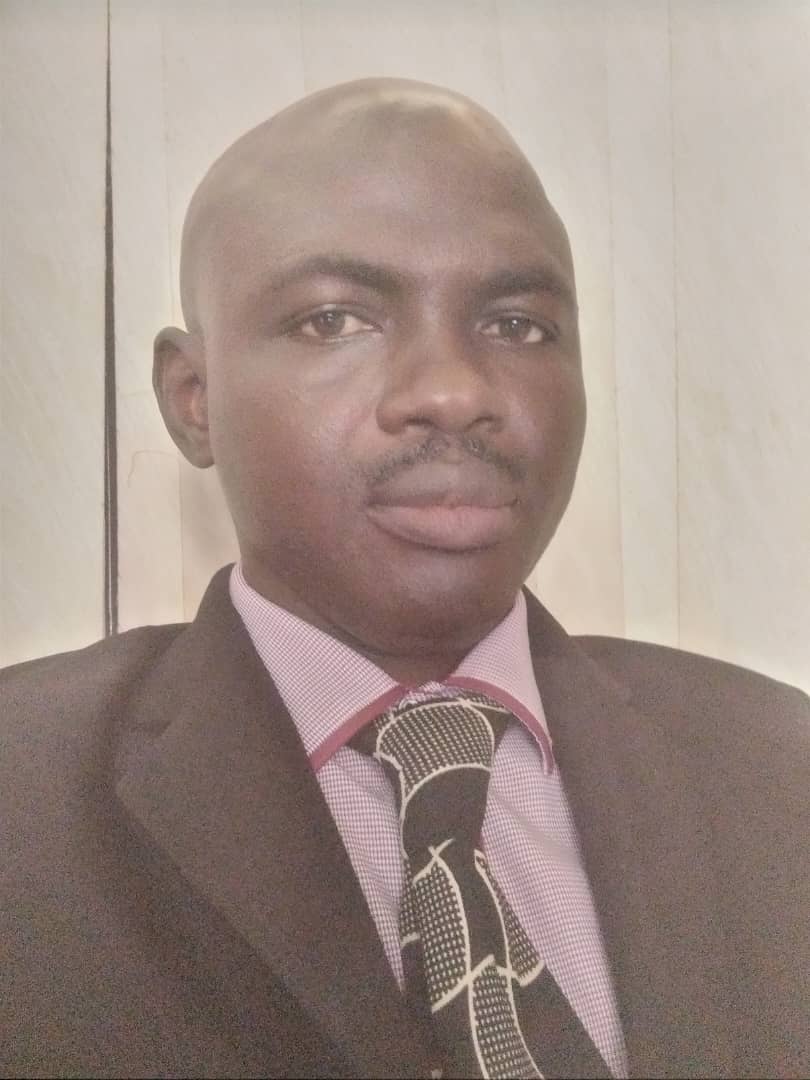

By: Abdullahi A. Bakare Ph.D.
Secretary, ASUU-KWASU
On December 23, 2025, history was made as finally the Academic Staff Union of Universities (ASUU), reached an agreement with the Federal Government of Nigeria. This achievement is a result of the cumulative efforts of the entire membership and leadership from the past to the present. It is the culmination of a lengthy renegotiation process that began in 2017 to review the 2009 FGN–ASUU Agreement.
The 2009 agreement stipulated a review every three years. Therefore, the renegotiation process should have started in 2012. Due to consistent reluctance of successive government administrations, but enduring persistence of ASUU, the review process finally started in 2017. Thus, ASUU was eventually able to force the FGN to renegotiation table. It can be said therefore, that 2017 was the year renegotiation of the 2009 FGN–ASUU agreement kicked off, when it was already five years overdue. The year 2017 also marks the beginning of an endless battle over the renegotiation process itself.
It started with the rejection of Dr. Wale Babalakin in 2018 and his eventual departure in 2020. ASUU’s public campaign against him was driven by his controversial funding model, which they argued was a form of commercialization. Citing financial realities, Dr. Wale Babalakin had proposed introduction of tuition fees of N350,000 per annum for Arts/Humanities students and N500,000 for Science students, alongside a loan scheme proposed as Education Bank, as a condition for the Federal Government to meet ASUU demands. The argument of ASUU for rejecting this funding model was clear: the Nigerian constitution places the funding responsibility on the government, not parents or students. ASUU further accused Babalakin of arrogance, acting more like a judge than a negotiator, and demeaning the collective bargaining process. His style stalled meaning progress for over a year.
Then came Prof. Munzali Jubril, inaugurated in 2020 and whose committee completed and submitted a draft renegotiated agreement to the government in May 2021. This was never signed or implemented. Instead, the government later constituted a new committee chaired by Professor Nimi Briggs in 2022, who also submitted a draft agreement that was never signed or implemented by the same administration of Muhammadu Buhari.
The Yayale Ahmed Committee, also known as the Federal Government Tertiary Institutions Expanded Negotiation Committee, was inaugurated in 2024, as the final committee tasked with concluding the prolong renegotiation of the 2009 agreement between the Nigerian government and university unions. The Committee eventually concluded the renegotiation process, bringing an end to a long-running industrial relations crisis that had persisted over 16 years. From President Buhari’s administration to that of Bola Hamed Tinubu, the formal renegotiation process of the 2009 FGN-ASUU agreement began in 2017 and took six separate government committees before a final deal was achieved. In chronological order, they are Dr. Wale Babalakin, SAN in 2017, Prof. Munzali Jibril in 2021, Prof. Nimi Briggs in 2022, Alhaji Yayale Ahmed in 2024, Mr. Abel Enitan (Permanent Secretary) in August 2024 and finally in October 2025, Alhaji Yayale Ahmed was re-appointed to chair the newly reconstituted and expanded final committee.
Although victory was ultimately secured, the treatment of ASUU by successive governments was characterized by systematic hostility, coercive tactics, and deliberate policy neglect that collectively created a sense of institutionalized disrespect. Since 2009, salary structure for ASUU members has remained unchanged. So, members have endured lowest salary scale in the World, a situation that severely demoralized the workforce and fueled a massive brain drain.
When Muhammadu Buhari became president in 2015, ASUU saw a glimmer of hope that their long-standing grievances would finally be addressed. The appointment of Mallam Adamu Adamu as Minister of Education in 2015 was viewed positively, primarily due to his past antecedents as a principled ally of the education sector in general and a pro-ASUU advocate in particular.
However, ASUU’s experience under Buhari’s administration turned out to be more difficult and disappointing than under any previous government. The expectation of improvement under him was sooner replaced by a harsher reality. This transition from hope to intense confrontation demonstrates to ASUU that Buhari administration was not a fresh start, but rather the most difficult chapter in their long struggle since the return of Democracy. The former Minister of Labour and Productivity, Dr. Chris Ngige’s aggressive confrontation with ASUU was perceived as an indirect manifestation of Buhari’s unspoken approval in the ASUU dispute.
Rather than resolving the problem, Ngige’s role was characterized by combative tactics that exacerbated the crisis in the university system. Hunger was turned into a weapon. Salaries of lecturers were withheld for eight months to enforce perverted compliance. His arrogant handling and provocative brinkmanship elevated into more than a simple labour dispute to a systemic assault on academic dignity. The no work, no pay policy for instance became a repressive tool for psychological warfare, causing psychological frustration intended to break an imaginary stubborn streaks of ASUU.
Ngige’s framing of “an employee cannot dictate to their employer” during the ASUU disputes, became popular as a rhetorical tool designed to cast university lecturers as insubordinate subordinates to reduce them to mere disobedient workers and simultaneously to create in them a sense of devaluation and eroded professional dignity. Instead of demoralizing the intellectuals, the experience of being treated like a piece of rag, and creating a low sense of self-worth and professional morale crisis, served as impetus to carry on with the struggle. This in turn created a ripple effect that led to a state of perpetual crisis, causing severe disruption to academic calendars and student life.
The moments and rhetoric of the government spearheaded by Chris Ngige used in swaying public sentiment against ASUU was another dimension. The government’s public messaging framed ASUU as an unreasonable party disrupting education. This deceptive narrative gradually shifted frustration away from the government’s inaction and toward the union’s strike. ASUU was depicted as an obstinate disruptor, an entity lacking a spirit of cooperation and fairness to the students and their parents.
Frequent public statements claiming that virtually all the concerns raised by ASUU had been addressed and as if it was all about monetary gains, framing a 35% raise for a professor’s salary as generous created a public perception that ASUU was greedy. Ngige was successful in creating a state of instability so much that the real issues of funding and autonomy were overshadowed.
Many students and parents alike, exhausted by the long disruptions, came to regard ASUU as the problem, ushering the slogan reflected in most public comments asking ASUU to rethink its tactics. The rising public resentment fractured the natural alliance between the trinity of parents, students and their lecturers. Naturally, being held accountable for the destruction they were fighting to prevent caused members moral injury and distressed professional dignity.
Chris Ngige’s recognition and registration of the breakaway groups such as the Congress of Nigeria University Academics (CONUA) and National Association of Medical and Dental Academics (NAMDA) was an extended calculated move to split ASUU and weaken its influence during the protracted action. Ngige presented registration certificates to CONUA and NAMDA in October 2022, citing freedom of association and the need for unions with a different modus operandi.
A less-informed segment of the public framed Ngige’s action as liberating lecturers from ASUU bondage and breaking a monopolistic structure harming the university system. The high-stakes warped political strategy was not only a premeditated attempt to splinter ASUU’s unity but also to pressure it into ending the strike. As is customary, ASUU condemned the action, called it inconsequential and as a law abiding association filed a lawsuit against it. When nothing else worked, Ngige initiated a legal action to compel ASUU back to classroom.
The combined pressure of the court order, withheld salaries (no work, no pay), the government’s concurrent registration of rival unions (CONUA and NAMDA), and the lingering public resentment added legal, financial, political and moral constraints to weaken ASUU’s position and force an end to the strike.
The legal maneuver was swift, and ASUU’s subsequent compliance spontaneous. The National Industrial Court (NIC) ordered ASUU to return to work immediately, while negotiations continued. The appellate court acknowledged ASUU’s grounds for appeal, but insisted it must first obey the NIC’s order. It gave ASUU 7 days to file a formal appeal, subject to a stringent condition that it show evidence of having resumed work within the stipulated shortest period.
ASUU’s decision to comply with the court order despite the controversy surrounding the ruling, speaks volumes of its character as a union of intellectuals. ASUU’s compliance was not a capitulation, but rather a strategic calculation over confrontation. Obeying the court was leveraged by ASUU to maintain moral and legal high ground while exploring alternative avenues for their struggle. It showed that as intellectuals, members were deeply committed to rule of law and due process.
As the events unfolded, leading up to 2023 when the present Government was inaugurated, ASUU held significant hope for President Bola Ahmed Tinubu. The hope was explicitly rooted in his clear campaign promise that there would be no ASUU strike under his tenure. This statement of assurance provided a sense of relief and at the same time raised high expectations of lecturers and students that an experienced politician and seasoned administrator would finally implement the long-stalled renegotiation of 2009 agreement, heralding a new era of stability. It was not therefore out of place for ASUU to have hoped that the Renewed Hope Agenda of President Tinubu would translate to respect for the collective bargaining principle, sustain university funding, and signaled a departure from the contempt and disdain displayed by previous governments. Instead, the hope soon gave way to renewed frustration, as the core issues remained unresolved.
The initial years of the Tinubu administration were marked by familiar delays and a cycle of political reluctance, just like the previous experience. ASUU made persistent but futile attempts to meet President Tinubu for intervention in resolving the long-standing issues, while watching other groups whose meeting with the President perceived to be politically advantageous, granted easy access for audience. Subsequent sequence of actions by the government reflects a pattern of reactive responses in form of financial palliatives and the formation of multiple renegotiation committees, the last and the most notable of which was Yayale Ahmed renegotiation committee, inaugurated in October 2024.
As typical of the successive committees since 2017, the Yayale Ahmed committee also produced a draft agreement waiting to be signed or implemented. The government asked for three weeks of grace before ASUU’s August 2025 NEC meeting, but deliberately ignored the deadline. This was followed by a complete breakdown in communication and cessation of interactions with the union, precipitating ASUU to issue a second strike ultimatum.
In a twist of events to prevent the strike on the eve of the strike deadline, government responded by presenting an hurriedly packaged last-minute offer considered to be provocative and a total departure from the letter and spirit of the renegotiated draft agreement by the Yayale committee. This betrayal of hope and trust led to the declaration of the October 2025 warning strike which was to be followed by full blown strike should the federal government refuse to accede to the union’s demands.
In response to the strike, Dr. Tunji Alausa, the Minister of Education, took a misguided hard stance. He invoked the “no work, no pay” rule and to make matter worse, directed university vice-chancellors to conduct physical headcounts of lecturers who showed up for work. He insisted the government had made a comprehensive offer and accused ASUU of lacking cooperative attitudes. But his tactic backfired. For ASUU, the Minister’s hardline stance proved the necessity of their strike, transforming the action into a principled stand against a government believed not to have intention of negotiating in good faith.
The cycle of deadlock was timely broken by Presidential and Senate interventions. Both the two-pronged political interventions provided not only a political platform for mediating to resolve the impasse, they also exerted Top-Down Authority to close the deal. On December 23 2025, ASUU, our Union did not only successfully reach an agreement with the Federal Government of Nigeria, it also secured official signature for the new agreement. The finalization of the long 16-year renegotiation process represents a pivotal moment that turned a mirage into a reality, case closed.
The whole episode defines two diametrically opposing stories: one for the heroes and one for the villains. ASUU stands tall as the undisputed and greatest hero. For decades, the union fought a lonely, principled cause that many, including some of its own members, believed was doomed to fail. ASUU has established itself not as a mere trade union agitating for pay; they are the last line of defense for an entire university ecosystem, cascading down into the entire lower-level higher education institutions.
When government weaponized hunger, ASUU weaponized ideas. When government issued propaganda, ASUU issued detailed rebuttals. ASUU employed strategic patience as its powerful weapon, enduring public scorn and personal hardship to keep the fundamental issues (university funding, academic freedom, and infrastructural revitalization) on the national agenda.
The political heroes include President Bola Ahmed Tinubu, the Federal Republic Senate, the Minister of Education, Dr. Tunji Alausa and the Chairman of the renegotiation committee, Alhaji Yayale Ahmed. The President provided the decisive political will that broke a cycle of failed committees and empty promises. The directive of Tinubu, the Supreme Commander of Renewed Hope for an urgent resolution provided the indispensable top-down authority that compelled the bureaucracy to act. The Senate of the Federal Republic assumed the image of Conscientious Intercessor. The Senate performed a critical dual role. It served as both a public forum for ASUU’s grievances and a private chamber for exerting intense political pressure on the executive.
While his initial “no work, no pay” posture mirrored typical governmental hardball, the Minister of Education, Dr. Tunji Alausa’s last push that was needed to cross the line, shepherd the perceived complex agreement to reality. He eventually became the bridge between the presidential directive and bureaucratic action. Unlike past committees that produced drafts which were later ignored by the government, Yayale Ahmed’s committee succeeded. He was granted the political backing and authority to finalize a complete, actionable agreement, making him the architect of the final settlement.
The general public, parents, and the students in particular, are not heroes of the struggle, but its enduring beneficiaries. Their disrupted academic calendars, deteriorating learning environments, and uncertain futures constituted the human evidence that made ASUU’s fight both urgent and just. Now they are the principal inheritors of a more stable, better-funded academic system. For the poor parents, public university education is not just a choice, the resolution of the crisis secures a viable future for their children at an affordable cost, while safeguarding their generational investment and hope.
The greatest beneficiary in this category is the nation itself. By salvaging its premier universities, the country defends its intellectual productive capacity, research output, and global competitiveness. Every citizen of a nation benefits from a system that can produce better physicians, engineers, educators, inventors and innovators.
The greatest villains of the whole narrative remain the immediate past President Muhammadu Buhari, Vice President Osinbajo (a supposed renowned technocrat, Professor and Silk, who for eight years maintained a pattern of total disengagement from the escalated crisis that was consuming the academic community he once belonged to), the former Minister of Education, Adamu Adamu (for symbolising the very governmental intransigence he once condemned) and former Minister of Labour and Productivity, Dr. Chris Ngige.
Buhari’s leadership fostered political inertia and indifference that allowed the crisis to fester. Ngige was the implementer of hostile tactics. He acted as a biased conciliator, derailing negotiations. He deliberately invoked and enforced the coercive policy of no-work-no-pay against striking lecturers to punish and impoverish them. He used divide and rule tactic to illegally register rival unions, CONUA and NAMDA to weaken ASUU’s membership and cripple their bargaining power. He made inflammatory public remarks full of contempt and disdain to dismiss ASUU’s demands and/or misrepresent boardroom agreements with it. He shifted the dispute from the negotiation table to the courtroom, using it as a legally-sanctioned weapon to criminalize a legitimate struggle.
The coercive court order secured against ASUU was framed to create a scenario of ‘comply and lose leverage or defy and be branded lawless’ thus delivering an overall no-win scenario to ASUU. Ngige’s actions ultimately cast his legacy in the dispute as a disrupter, prioritizing political tactics rather than a stabilizer proffering sustainable solutions for ensuring academic stability in Nigeria’s public universities.
In a turn of event and a twist of fate, as of December 2025, Chris Ngige, a villain in the ASUU struggle, began a voyage in battling with a fraud-related charges, while the ASUU he was so determined to destroy was vindicated by a hard-won, principled victory in the same month of December 2025. Again, the signed new agreement will take effect in January 2026, while Ngige’s trial for eight counts of contract fraud, abuse of office, and acceptance of gifts, involving N2.2 billion is set for the same January 2026. What a turn of event and a twist of fate? An answer deducible from the current situation suggests that the system ASUU fought to protect will have a more enduring legacy outlasting the authority figures represented in the likes of Ngige who once opposed it.
Based on the newly signed 2025 agreement, the Federal Government has met and provided a resolution for most of ASUU’s longstanding core demands, which had triggered numerous strikes over the years. IPPIS has been completely exited and universities now enjoy stronger autonomy and academic freedom. Earned Academic Allowances has been addressed through staff development. Neglected salary review has yielded improved salary structure.
Meanwhile, the new document offers fresh transformative gains in pension and retirement benefits, indicating that Professors retiring at age 70 are now to get a pension equal to their full annual salary. In addition to the existing Tetfund (an intervention agency for funding public tertiary institutions), a new statutory body to be called National Research Council (NRC) will be established and funded with at least 1% of Nigeria’s GDP to be dedicated to fund and steer national research. Finally the new document guarantees ‘no victimization clause’ for union members’ prior involvement in the struggle. This is a direct rebuke to the last administration’s attempts to break the union’s resolve through intimidation, no-work-no-pay policy, and legal coercion.
In the end, the successful renegotiation of the 2009 is a tale that demonstrates the triumph of courage over claws. The chronicle reveals a profound truth about power and persistence. While state claws can inflict deep wounds, they cannot obliterate a just cause. The government’s arsenal of coercive weapons such as withholding salaries, ill intentionally securing court injunctions and using divide-and-rule tactics, met its match in the intellectual fortitude and unflinching doggedness of ASUU’s members.
For 16 years, ASUU’s courage manifested in strategic strikes, calculated counter-proposals, and unbreakable collective spirit. This was more than just a defiance, it was a force of endurance in defense of the ideology that Nigerian universities deserve sustainable funding, dignified working conditions, and self-governance.
The final accord was not signed under duress, but rather following a long and hard-won renegotiation process, making it to stand as a monumental vindication. It proves that even the sharpest claws of government cannot forever quash a just struggle fought by a people who build and nurture the very foundations of a nation’s future. However, while this intellectual battle demonstrates that courage can meet claws and prevail, it also passes a baton, the need for ongoing vigilance to ensure that this hard-won progress translates into lasting peace.
Together we bargain, divided we beg! A people united cannot be defeated!
Abdullahi A. Bakare Ph.D.
Secretary, ASUU-KWASU
© tobayan1@yahoo.com