


In a country where politicians routinely disappear between elections, one lawmaker from Oke-Ogun lost his seat, spent four years in the cold, fought his way back through a brutal primary, and then proceeded to deliver the most productive tenure of his career. This is the story of Hon. Kareem Tajudeen Abisodun Were — and why his 2023-to-date record in the 10th National Assembly is worth every Nigerian’s attention.
I. The Return of a Man With Something to Prove
There is a particular kind of political hunger that only absence can create. You cannot manufacture it with money or connections. It is forged in the years spent watching someone else occupy your seat, someone else answer to your people, someone else receive what you believe was rightfully yours.
Hon. Kareem Tajudeen Abisodun Were — universally known across Oke-Ogun as simply ‘Were’ — knows that hunger intimately.
He first represented Saki West, Saki East and ATISBO Federal Constituency in the 6th National Assembly, serving his people from 2011 to 2015. Then he lost the seat — not to the opposition, but through the grinding internal machinery of party politics. The constituency passed to another hand for the 8th Assembly term. Were was out.
But he was not done.
In the run-up to the 2023 elections, Were re-entered the arena. He contested the APC primary for his old constituency against the incumbent — a contest that was anything but easy. He won. He then went on to win the general election, defeating multiple candidates in a contest that confirmed what his people had quietly maintained through his four-year absence: that ‘Were’ was their man, and they had been waiting.
As InsideOyo reported when his victory was declared in February 2023: “Were, as he is fondly called, has represented the constituency twice at the House of Representatives, Abuja.”
That line — simple, factual, carrying more political weight than it appears — tells you everything about what his return meant. This was not a debut. This was a comeback. And comeback stories, in Nigerian politics as in life, are the ones worth reading carefully.
II. Not a Newcomer — A Man Who Knew What He Was Walking Back Into
One of the most important things to understand about Were’s current tenure is that he arrived in 2023 with something most of his colleagues did not have: institutional memory, hard-won relationships, and the specific kind of patience that only comes from having sat in those chambers before.
He knew the rhythm of the House. He knew which ministry officials could be pressured into delivering constituency projects and which ones needed persistent follow-up. He had existing relationships with traditional rulers, community leaders, and political stakeholders across his three local government areas. He did not need a year to find his feet.
The result is a lawmaker who has operated, from essentially the first session of the 10th Assembly, at a level of effectiveness that genuinely takes most members two or three years to reach — if they ever get there at all.
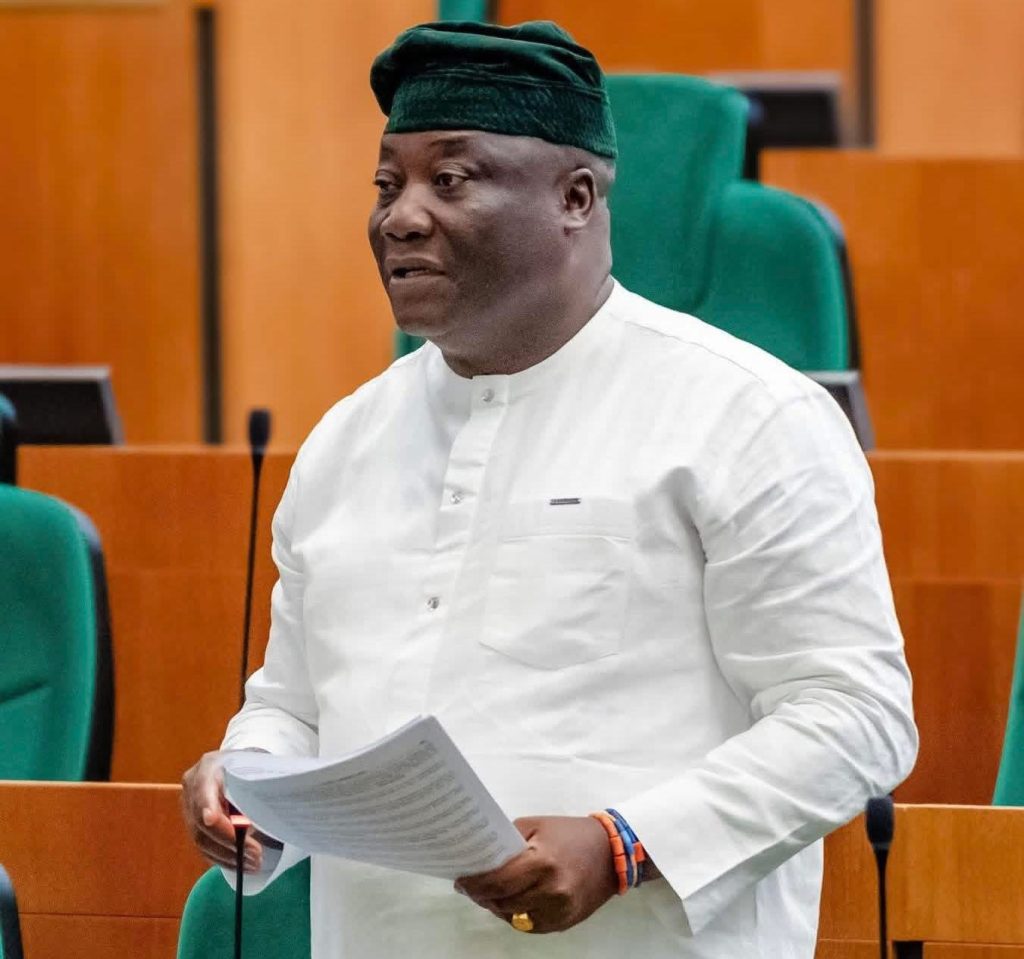
Parliament Reports, which tracks legislative contributions across all 360 members of the House, describes him as “a returning member” in the 10th Assembly, serving as Chairman of the House Committee on Culture and Tourism.
That committee chairmanship is the platform from which much of his current-term work flows — and it is a platform he has used with notable purpose.
III. The Bills: Legislating for a Nigeria That Doesn’t Yet Exist
A lawmaker’s bill portfolio is the most honest document they produce. It is not edited by a communications team. It does not respond to trending conversations. It is simply the list of things a legislator has decided are important enough to fight for within the formal machinery of the state.
Were’s bill portfolio in the 10th Assembly is the work of someone thinking not about the next news cycle, but about the next generation.
His four landmark bills in aviation and technology — the Aviation Technology Innovation Hub Bill, the National Aviation Technology Development Bill, the Air Traffic Management Modernization Bill, and the National Shea Butter Research Institute Bill — reveal a lawmaker whose policy imagination has expanded considerably since his first stint in the green chamber.
Consider the logic behind each. Nigeria’s aviation sector is one of the most foreign-dependent industries in the economy. Foreign engineers maintain the aircraft. Foreign companies provide the technology. Foreign insurance firms hold the risk. The aviation bills Were is sponsoring are designed, piece by piece, to begin reversing this: to create an ecosystem for aviation innovation, build domestic technical capacity, and modernise air traffic management systems that experts have long described as chronically underfunded and outdated.
Then there is the National Shea Butter Research Institute Bill — the one that perhaps most clearly reveals Were’s political sophistication. Nigeria is the world’s largest producer of shea nuts, a commodity that global cosmetics and food companies pay billions of dollars annually to source from across West Africa. Yet Nigeria processes and exports a fraction of what it produces, shipping out the raw nut and surrendering the value-added processing — and the jobs and forex that come with it — to other nations. A dedicated national research institute would build the scientific infrastructure to change this, and it would serve Oke-Ogun and the broader North-West, where the bulk of Nigeria’s shea trees grow, in ways that no political speech ever could.
These bills are not written to generate press releases. They are written to move needles. In a House where some members complete full four-year terms without a single bill to their name, this portfolio positions Were among the most legislatively productive members of the 10th Assembly.
IV. Oversight That Leaves Fingerprints on the Ground
Oversight is the most powerful — and most routinely wasted — tool in a legislator’s arsenal. In Nigeria’s National Assembly, committees summon agencies, ministers perform their explanations, and the cycle completes without visible change. This is the established rhythm. Were has disrupted it.
His oversight work in this term has translated directly into physical infrastructure for three local governments that have spent decades waiting for the federal government to notice them.
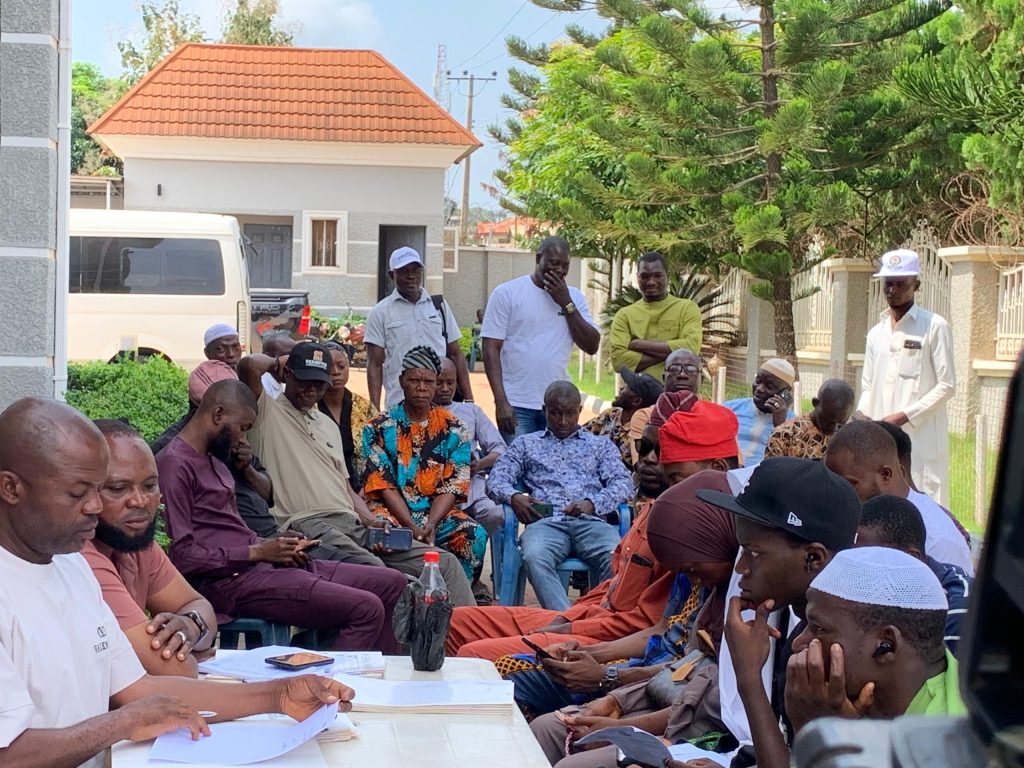
Through targeted and sustained engagement with the Ministry of Power and relevant federal agencies, the Saki West, Saki East and ATISBO constituency has received: over 300 solar streetlights installed across communities in all three local government areas, bringing light — and with it, security and economic activity — to roads that knew only darkness after sundown; an additional 30 solar streetlights through the Ministry of Power specifically for Okere-in-Council; a 100KVA Solar Power Plant for The Oke-Ogun Polytechnic, Saki, providing reliable electricity to a tertiary institution serving thousands of students; and solar-powered boreholes in Sepeteri, Salam-Salam, Irawo and Challenge communities, addressing a water supply crisis that has persisted across multiple administrations.
These are not rhetorical achievements. They are things you can point at, photograph, and measure. They are the difference between a community road that functions at night and one that does not. Between a polytechnic that can run computers and one that cannot. Between families that walk kilometres to collect water and families that do not.
None of this happened by accident. It required Were to do something most legislators find genuinely tedious: show up at ministries, file the right requests, follow up when bureaucracy stalled, escalate when officials dragged their feet, and ensure that what was promised was actually installed — on the ground, in the communities, visible to the people who voted for him.

V. A Constituency That Can Show You What He Has Done
The true audit of representation is not the press release issued in Abuja. It is the question asked by a constituent in Saki: “What has he actually done?”
Were’s constituents have answers to this question, and they can point to things.
In education, they can point to classroom blocks constructed in Ago Are and Tede — communities in ATISBO local government that know the difference between a school that has space and one that does not. They can point to the Digital Learning Centres established at ADS High School and Ansar-Deen High School in Saki — spaces that give students access to technology in an environment where such access was previously something you read about in other people’s lives.
They remember the 5,000 WAEC/SSCE past questions distributed to final-year students preparing for examinations that can define their futures. They remember the students whose examination fees Were quietly paid, removing the obstacle of poverty from the path of talent.
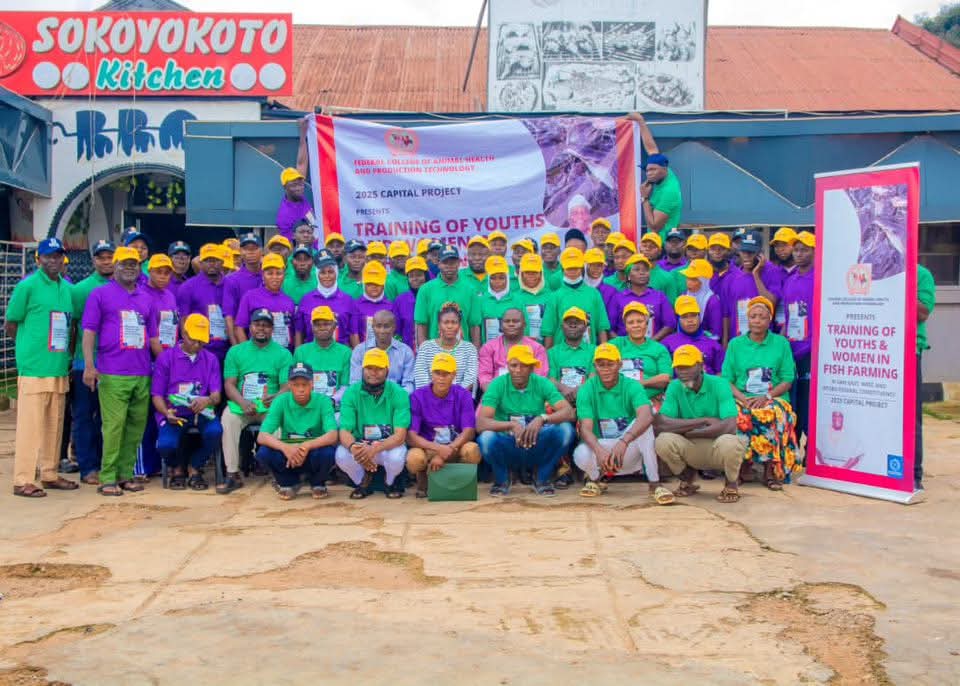
For the women of the constituency, the record is equally concrete. Over 300 grinding machines distributed to women in a constituency where micro-enterprise is often the primary engine of household income. Startup capital of ₦500,000 each given to selected constituents beginning business ventures. Training programmes in fish farming and agro-processing that build skills intended to outlast any political tenure. These are not gifts designed to create dependency. They are investments designed to create capacity.
For farmers — and Oke-Ogun is deeply agricultural country — Were has delivered fertilizers, herbicides and sprayers to more than 200 farmers, inputs that directly affect whether the planting season produces profit or loss. For transport workers, ₦5.5 million in financial support to the NURTW. For the broader community, over 100 motorcycles distributed to constituents, providing both mobility and livelihood in areas where both are scarce.
The Funfunlogun Ileya Football Competition — a grassroots tournament Were has supported and organised — might appear to be a soft intervention compared to boreholes and classroom blocks. It is not. In communities where young men have energy and limited formal opportunity, organised sport is social infrastructure. It gives people something to belong to, something to compete for, something to be proud of. Were understands this. It is visible in how he governs.
Religious and civic community bonds have not been neglected. Were has distributed vehicles and financial support to traditional and religious leaders, provided Sallah packages and Christmas rice, and supported the Saki Parapo and other civic organisations. In a multi-faith constituency where social harmony is not automatic, these gestures are more than symbolism — they are the quiet, consistent work of a lawmaker who understands that representation includes the space between the big projects.
VI. The Appointments That Opened Doors
One of the least discussed but most meaningful metrics of a legislator’s effectiveness is their capacity to connect their constituents to federal opportunity. Bills and boreholes are visible. Appointments are less so — but their impact runs deep.
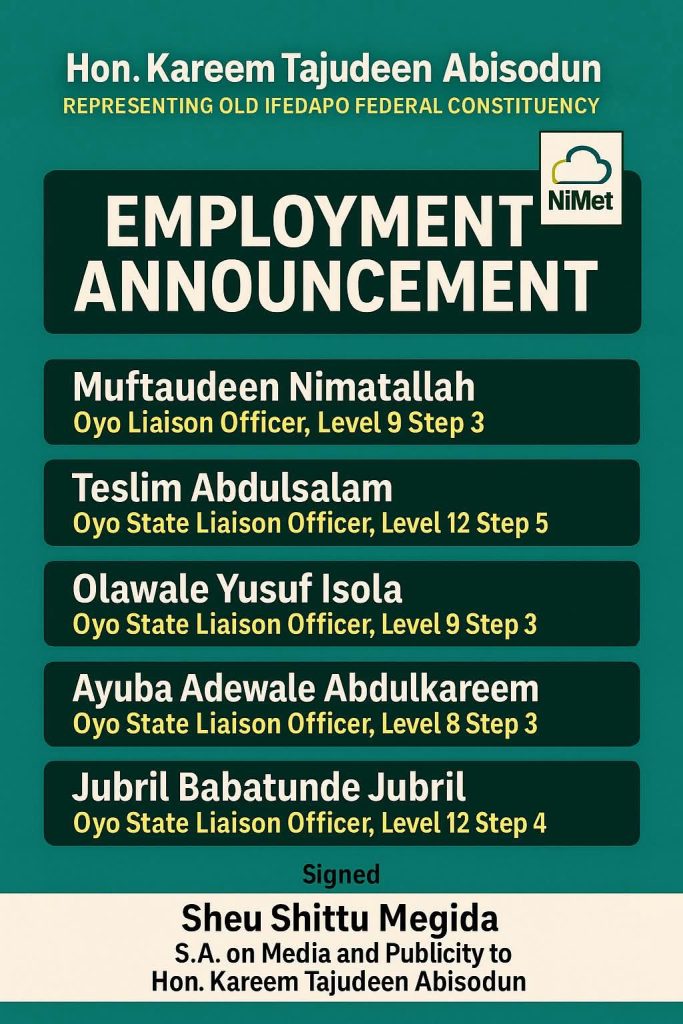
Were has facilitated over 40 federal appointments for constituents across key government agencies during this current term. Seventeen individuals who now have positions in the federal bureaucracy — salaries, career paths, institutional presence in the structures that govern the country.
For a constituency that has historically been marginalised from the patronage networks of federal power, this number is significant. Oke-Ogun has long felt like a region that produces votes but receives little in return from Abuja. Each of those 40 appointments is a small but durable reversal of that pattern.
VII. The Night He Was Crowned by His Own People
There are honours that politics can bestow, and there are honours that politics cannot. In April 2024, Were received one of the latter.
At the 20th anniversary celebrations of the imamship of the Grand Chief Imam of Saki Land, Sheikh Abdulaziz Jeje Kunmi Areebo Mosojo, Were was turbaned as the Asiwaju Adinni of Saki Land. As InsideOyo reported, the ceremony recognised Were “alongside other sons and daughters of Saki,” and at it, he announced the gift of another Toyota Venza to the Chief Imam — repeating a gesture he had made approximately ten years earlier.
The title of Asiwaju Adinni is not given for political positioning. It is conferred for demonstrated service to the Muslim community and to Saki’s broader cultural fabric. That the Chief Imam’s celebration was the occasion for this recognition says something about the kind of relationship Were has maintained with Saki’s religious leadership over years and decades — not just since he returned to the House of Representatives.
In a political culture where leaders routinely dissolve into Abuja and forget the communities that sent them, a man who returns for a ceremony like this one — and who is honoured in this manner when he arrives — is making a statement about his priorities that no press release could replicate.
VIII. What a Comeback Looks Like When Done Right
It would be easy to look at Were’s record from 2023 to today and assume it is simply the product of a capable person doing his job. But the context matters. This is a man who lost this seat, spent four years outside the legislature, fought his way back through a contested primary, and then delivered a body of work that outpaces many colleagues who never left.
The gap between Were’s first term and his return was not wasted time. It was the period in which his understanding of what needed to be done matured. The bills he is sponsoring now — the aviation technology bills, the shea butter research institute — reflect the thinking of a legislator who spent time outside the House studying where Nigeria’s real leverage points lie, not someone generating legislation to fill a quota.
The constituency interventions he has delivered in this term — the solar infrastructure, the classroom blocks, the digital learning centres, the agricultural inputs — reflect someone who arrived back in 2023 with a list already written and relationships already warm, and started executing immediately.
This is what a comeback looks like when done right. Not a quiet return to mediocrity. Not a gradual reacquaintance with legislative life. A focused, purposeful, productive tenure that carries the urgency of someone who knows, from experience, how quickly four years can pass.
IX. The Bigger Verdict
Nigeria does not lack politicians. It lacks legislators — people who understand that the mandate given by a constituency is not primarily a mandate to survive politically, but a mandate to deliver. The distinction sounds obvious. In practice, it is the rarest thing in Nigerian public life.
Were, across the 2023-to-date period of the 10th Assembly, has demonstrated the distinction repeatedly. He has sponsored serious legislation. He has delivered infrastructure through oversight. He has empowered constituents across multiple sectors. He has maintained relationships with his people between elections, not just at election time. And he has done it all while building a committee chairmanship record that produces public outcomes rather than public performances.
The 2027 election is approaching. When the voters of Saki West, Saki East and ATISBO evaluate their representative, they will not need to search very hard for evidence. The evidence is visible in their communities: in the lights along their roads, the water in their boreholes, the machines in the hands of their wives and mothers, the digital centres in their schools.
Were came back in 2023 with something to prove. He has spent two and a half years proving it. And he is, by all available evidence, not finished.



This is pure truth about my Principal. Nothing aside this was meant to make reality looks good on paper.
He truly came back with a lot to prove!
RT. Hon. Tajudeen Kareem Abisodun wẹrẹ is a blessing to his constituency and constituents. He is not just a lawmaker, he is also transformer and developer who is working strategically towards the growth and development of Saki-East, Saki-West and Atisbo Federal Constituency.
His scorecards shows his performance at the Lower Chamber of the National Assembly.
Support Hon. WERE for Oyo North Senator come 2027.