
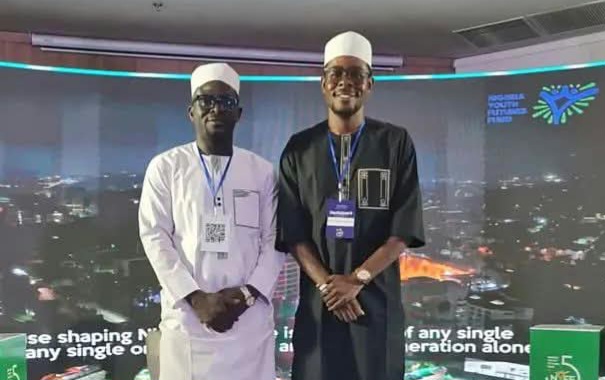

Two academics and Communication Experxt from the Department of Mass Communication, Kwara State University (KWASU), Malete, Habeeb Opeyemi Daranijo and Abdullahi Ishola Salaudeen, have recorded a major academic breakthrough after emerging among the top nine researchers awarded publication support grants at the Nigeria Youth Futures Fund (NYFF) @5 National Youth Leadership and Ecosystem Convening in Abuja.
The duo secured a combined $3,000 research grant, with each researcher entitled to $1,500 in publication support to facilitate the publication of their respective research papers in reputable scholarly journals.
Daranijo, a native of Saki in Oyo State and Salaudeen from Ile-Ogbo in Osun State were selected from a competitive pool of 100 research paper submissions received from different parts of Nigeria, placing them among the nine outstanding authors whose research works earned recognition under the initiative.
The achievement is particularly significant given the increasing global attention on artificial intelligence, digital transformation and the role of emerging technologies in shaping democratic institutions, civic participation and youth engagement.
Salaudeen earned recognition for his research paper titled “Artificial Intelligence and Civic Technology: Algorithmic Mediation and Digital Media Engagement in Nigeria Democratic Participation.”
The research interrogates the growing influence of artificial intelligence-driven algorithms and digital media platforms on political communication and democratic participation in Nigeria. It examines how algorithmic mediation shapes citizens’ exposure to political information, influences digital engagement and potentially transforms the ways Nigerians participate in democratic processes.
His research further brings into focus the growing relationship between civic technology and democratic inclusion, particularly the opportunities and challenges associated with deploying technology to strengthen citizens’ participation in governance and political discourse.
Similarly, Daranijo’s research paper, titled “Artificial Intelligence, Social Media, and Civic Technology Adoption: Predicting Digital Civic Engagement among Nigerian Youths,” examines the intersection of artificial intelligence, social media and civic technology adoption, with particular emphasis on predicting the factors that influence digital civic engagement among Nigerian youths.
The study evaluates predictive models for understanding young people’s participation in digital civic activities, offering an important research perspective on how emerging technologies and social media platforms can influence youth involvement in public affairs, governance and democratic development.
The selection of the two KWASU academics, who are also the Co-Founder of DIAF Communication and Korrectnews Media, from 100 entries underscores the competitive character of the research initiative and the growing relevance of their areas of academic inquiry to contemporary national and global conversations.
Beyond the financial reward, the $1,500 publication support allocated to each researcher is expected to provide an important opportunity for the scholars to expand the visibility of their research, contribute to existing academic literature and make their findings accessible to a wider audience through reputable scholarly publications.
For Salaudeen, the recognition also represents a notable intersection of academic scholarship and professional media practice, considering his involvement in university teaching, communication development and media entrepreneurship through DIAF Communication and Korrectnews Media.
The NYFF @5 National Youth Leadership and Ecosystem Convening provided a platform for stakeholders within Nigeria’s youth development ecosystem to engage on issues surrounding leadership, innovation, research, institutional development and the future of young Nigerians.
The recognition of Daranijo and Salaudeen at the national gathering further reinforces the importance of university-based research in addressing emerging societal challenges, particularly the need to understand the implications of artificial intelligence and digital technologies for democratic governance and youth participation.
Their achievement is not only a personal milestone for the two researchers but also a source of pride for Kwara State University, its Department of Mass Communication and Nigeria’s academic community.