
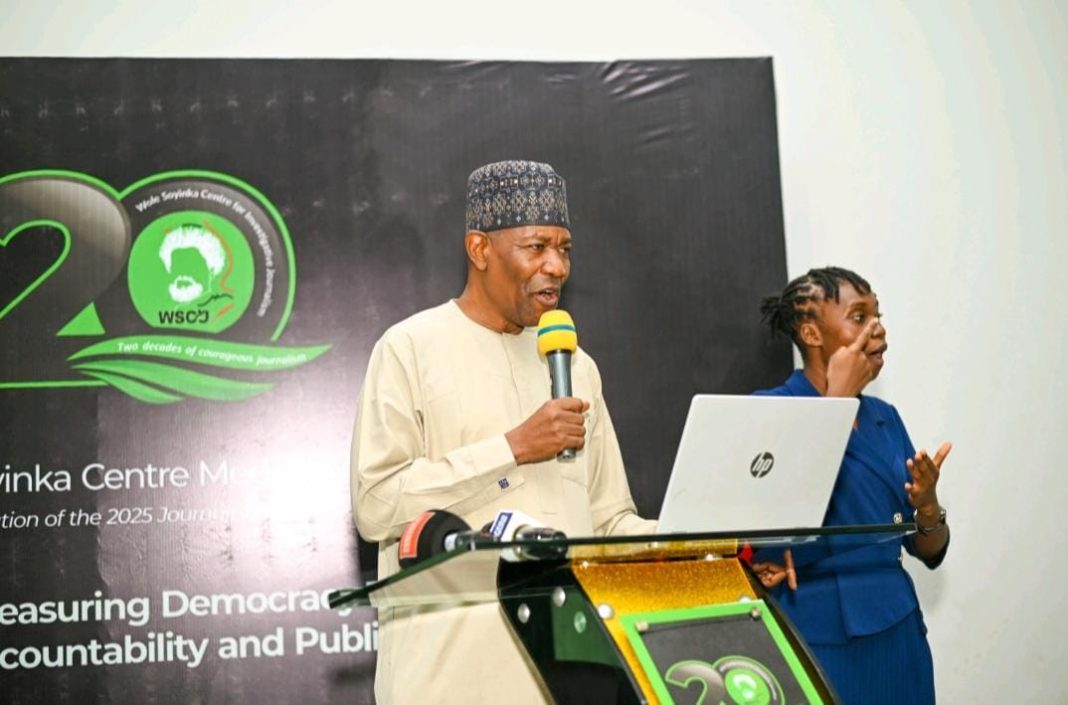

The immediate past Vice-Chancellor of the Federal University, Kashere, Professor Umaru Pate, has expressed concern over the quality of journalism education in Nigeria, stating that one of the greatest challenges facing media and journalism training today is not the students but many lecturers who have failed to keep pace with digital transformation.
Pate made the assertion on Monday while delivering the keynote address at the 18th Wole Soyinka Centre Media Lecture Series held at The Providence, Ikeja GRA, Lagos.
The event, themed “Beyond the Ballot: Measuring Democracy Through Security, Welfare, Accountability and Public Trust,” also featured the public presentation of the 2025 Journalism and Civic Space Status Report.
According to the communication scholar, journalism education has evolved far beyond the traditional principles of the 5Ws and H (Who, What, When, Where, Why and How), requiring educators to possess strong digital competencies to prepare students for the realities of modern newsrooms.
“The major challenges of media and journalism training nowadays are the lecturers and teachers of journalism and not the students,” Pate said.
He observed that many journalism lecturers are still struggling with the use of computers and other digital technologies despite the rapid transformation of the media industry.
“Most lecturers are still far behind in the use of computer and digital facilities,” he said, adding that “some students are more equipped and have a better understanding of the digital media landscape than some of their lecturers.”
Professor Pate stressed that journalism education must move beyond teaching conventional news writing techniques to embracing digital storytelling, multimedia production, artificial intelligence, data journalism, audience analytics, fact-checking, and other emerging technologies shaping contemporary media practice.
He urged journalism educators to continuously update their knowledge and acquire relevant digital skills if they are to effectively prepare students for careers in today’s rapidly changing media environment.
The communication expert noted that while many students are naturally adapting to new media technologies, institutions must ensure that lecturers receive regular training and professional development to bridge the widening digital skills gap between teachers and learners.
The annual Wole Soyinka Centre Media Lecture Series brings together media professionals, academics, policymakers, civil society actors and development partners to discuss issues affecting journalism, democracy and civic engagement in Nigeria.
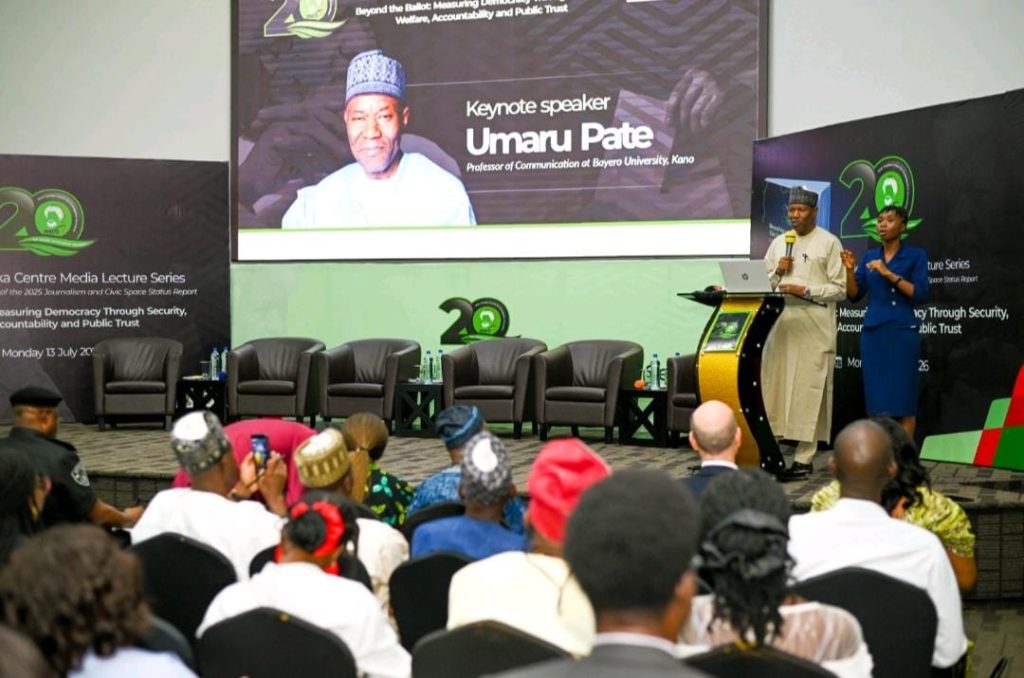
The lecture also featured a review of the 2025 Journalism and Civic Space Status Report by Professor Ayodele Atsenuwa, Director of Legal Research and Resources Development Centre, University of Lagos.
Professor Pate’s remarks come at a time when journalism schools across Nigeria are increasingly integrating digital journalism, multimedia reporting, mobile journalism, artificial intelligence, and data-driven reporting into their curricula in response to the changing demands of the global media industry.