
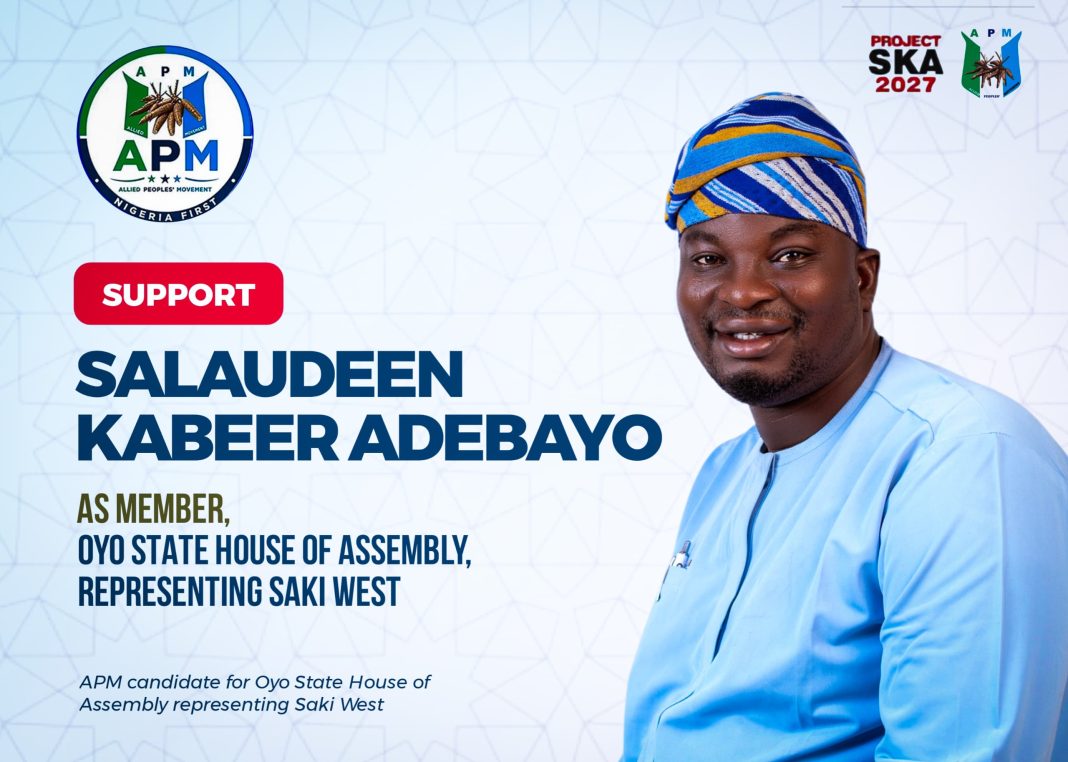

By Hon. Salaudeen Kabeer Adebayo
Democracy is often celebrated as the government of the people, by the people, and for the people. While elections are the most visible expression of democracy, the true strength of any democratic system lies in what happens after the votes have been counted. Good governance is sustained not only through lawmaking but also through effective oversight. Without legislative oversight, democracy becomes vulnerable to abuse of power, inefficiency, corruption, and poor service delivery.
Legislative oversight is one of the most important constitutional responsibilities of elected representatives. It is the mechanism through which the legislature monitors the activities of the executive arm of government to ensure that public resources are properly managed, policies are effectively implemented, and government agencies remain accountable to the people. In essence, oversight is the bridge that connects government promises with actual performance.
A legislature that merely passes laws without monitoring their implementation cannot adequately serve the interests of the people. Citizens do not only judge governments by the quality of legislation enacted but also by the impact of those laws on their daily lives. This is why oversight is indispensable. It ensures that approved budgets translate into completed roads, functional hospitals, quality schools, improved security, and better living conditions for the people.
In Nigeria, where public expectations continue to rise amidst economic challenges, legislative oversight has become even more critical. Every appropriation passed by a legislative house represents the collective resources of the people. Every project approved is funded by taxpayers. Therefore, elected representatives have a moral and constitutional obligation to ensure that every naira allocated serves its intended purpose. When oversight is weak, abandoned projects, inflated contracts, financial leakages, and poor public service often become the unfortunate consequences.
Effective oversight also strengthens transparency and accountability in governance. Public officials are more likely to discharge their responsibilities diligently when they know that their actions are subject to legislative scrutiny. Regular committee inspections, public hearings, budget performance reviews, and investigative sessions help identify challenges early and create opportunities for corrective action before problems escalate.
Beyond financial accountability, legislative oversight improves policy outcomes. Many government programmes fail not because they are poorly conceived but because implementation is weak. Oversight enables legislators to evaluate whether policies are achieving their intended objectives and whether necessary adjustments are required. It transforms governance from a process of merely making decisions into one of measuring results.
Perhaps one of the greatest benefits of legislative oversight is the confidence it builds between government and citizens. Democracy thrives when the people believe that their voices matter and that those entrusted with public office are genuinely working in their interest. When legislators actively engage with communities, monitor projects, receive feedback, and hold implementing agencies accountable, public trust in democratic institutions grows stronger.
As someone who has served as the Majority Leader of the Saki West Legislative Council, I have come to appreciate that oversight is not about confrontation or political rivalry. Rather, it is a partnership aimed at improving governance. Constructive oversight encourages cooperation between the legislature and the executive while maintaining the constitutional principle of checks and balances. Both arms of government ultimately serve the same people and share the responsibility of delivering development.
At the local government level, I have witnessed firsthand how consistent engagement with government officials, community stakeholders, and project implementers can lead to better outcomes. Effective oversight requires legislators to leave the comfort of legislative chambers and engage directly with the realities of the people they represent. It demands regular visits to project sites, interaction with beneficiaries, careful examination of budget implementation, and the courage to ask difficult but necessary questions.
The legislature must also embrace innovation in carrying out its oversight responsibilities. Technology now offers opportunities for greater transparency through digital project monitoring, public reporting platforms, open budget systems, and citizen participation. Oversight should not be confined to committee rooms; it should be an open and participatory process that allows citizens to contribute information and monitor government performance alongside their representatives.
For developing democracies like Nigeria, strengthening legislative oversight is essential for sustainable development. Good governance cannot exist where public institutions operate without accountability. Likewise, economic growth and social progress cannot be achieved when public resources are wasted or diverted from their intended purposes.
As we continue to deepen our democratic culture, every legislator must recognize that the true measure of leadership is not the number of motions moved or bills sponsored alone, but also the extent to which government programmes positively impact the lives of ordinary citizens. Oversight ensures that governance remains people-centred and development-oriented.
Ultimately, democracy is a covenant between leaders and the people. Elections confer authority, but oversight preserves accountability. Laws establish the framework for governance, but oversight guarantees that those laws produce meaningful results. It is through diligent oversight that public confidence is strengthened, institutions become more effective, and democracy fulfills its promise of improving the lives of all citizens.
A vibrant democracy requires a vibrant legislature—one that legislates wisely, represents faithfully, and oversees diligently. When legislative oversight is effective, democracy works better, government performs better, and society prospers.
The future of democratic governance depends not only on electing good leaders but also on ensuring that those leaders remain accountable every step of the way. That is the enduring value of legislative oversight, and that is why it remains one of the strongest pillars of every thriving democracy.