
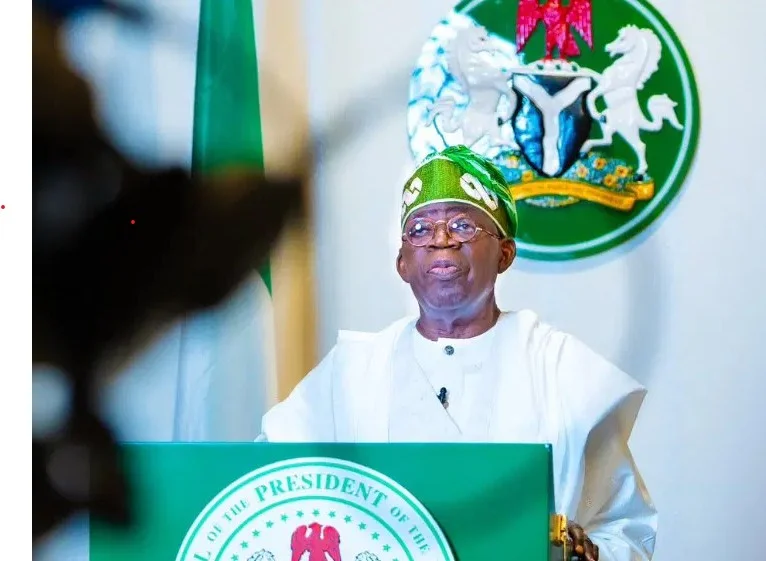

Reflecting on Nigeria’s 2023 general elections and the current state of the country’s political system, one cannot help but wonder whether President Bola Ahmed Tinubu’s influence stems from his long-standing expertise in coalition-building, the power of incumbency, the fragmentation of the opposition, or a combination of these factors.
The February 2023 presidential election was not without political controversies, power struggles and last-minute revelations. With the clock ticking towards the January 2027 general elections, should Nigerians expect a recurrence of these political dynamics, or has the political landscape fundamentally changed?
Following the mass defections and political alignments with President Tinubu’s administration between 2023 and 2026, involving high-profile politicians and elected officials across the country, particularly from the People’s Democratic Party (PDP), one must ask whether these realignments reflect politicians’ attempts to preserve their political relevance or voluntary defections motivated by admiration for the President’s achievements.
As of May 2023, the All Progressives Congress (APC) had 16 state governors. Its control of state governments subsequently expanded through elections, court decisions and defections from opposition parties. By 2026, the APC’s influence had grown considerably, with reports placing its governors at 31 out of Nigeria’s 36 states. Among the governors who have moved to the APC are Sheriff Oborevwori (Delta State), Umo Eno (Akwa Ibom), Peter Mbah (Enugu), Douye Diri (Bayelsa), Caleb Mutfwang (Plateau), Agbu Kefas (Taraba), Siminalayi Fubara (Rivers) and Abba Yusuf (Kano).
These political developments have raised questions about the strength of Nigeria’s opposition and whether the country is gradually moving towards a one party system. With the 2027 general elections approaching, the concentration of governors around the ruling party presents an important subject for political analysis.
Although some Nigerians attribute defections to attempts by governors to protect themselves from possible investigations by anti-corruption agencies, such claims require evidence before they can be accepted as established explanations. The presidency, on the other hand, has attributed the growing attraction of the APC to the economic reforms of the Tinubu’s administration, which it argues have increased revenue available to state governments and improved their fiscal capacity and developmental prospects.
Both explanations raise important questions. Are governors joining the APC because they believe the party offers better opportunities for governance and development, or are they responding to political calculations associated with the advantages of belonging to the party in power? Could a combination of these factors explain the pattern?
Beyond admiration: The political calculations behind defections
Political parties are not merely platforms for ideological expression. They also provide structures through which politicians pursue electoral ambitions, negotiate influence and secure their political future.
The internal crises that have weakened the PDP, particularly disputes over leadership and control of party structures, have provided a basis for some of its members to seek alternatives. In May 2026, it was reported that Peter Obi and Rabiu Kwankwaso had withdrawn from an opposition coalition intended to unite prominent political figures against Tinubu. Their departures highlighted the difficulties of reconciling competing ambitions and internal disagreements within an alliance seeking to present a common presidential candidate.
The fragmentation of the opposition may therefore be contributing to the growing influence of the ruling party. When opposition politicians struggle to agree on leadership, strategy and electoral arrangements, the ruling party may benefit from their inability to coordinate a common challenge.
Nevertheless, opposition fragmentation alone may not fully explain the pattern. Political realignments can also be influenced by access to federal power, the prospects of political appointments, relationships between federal and state governments, and the ambitions of politicians approaching the end of their terms.
Some commentators have raised concerns that opposition politicians may fear arrest and prosecutions by anti-corruption agencies for corruption related charges if they remain outside the ruling party. Such allegations deserve investigation, particularly where specific events or documented interactions suggest possible pressure. However, the timing of a defection alongside an investigation does not, by itself, establish that the investigation was politically motivated or that it compelled the politician to change parties.
The more fundamental question is whether Nigeria’s political environment rewards alignment with the federal government to such an extent that remaining in opposition becomes a less attractive option for state governors. If this is the case, the pattern may reveal not only the influence of an individual president, but also the incentives embedded in Nigeria’s political system.
Political alignment beyond party membership
Interestingly, political support for Tinubu’s re-election appears to extend beyond the formal boundaries of the APC. Several politicians who remain members of opposition parties have publicly expressed support for his second-term ambition.
In October 2026, reports emerged that Tinubu’s expanded presidential campaign council included Nyesom Wike, the FCT Minister and a PDP chieftain, as well as Chukwuma Soludo of the All Progressives Grand Alliance (APGA) and Ademola Adeleke of the Accord Party. Wike defended the inclusion of opposition figures, arguing that politicians could support Tinubu’s presidential ambition while retaining their affiliations with other political parties.
This arrangement presents an interesting dimension of Nigerian politics. It suggests that political alliances do not always follow formal party divisions. A politician may support the President at the national level while maintaining a different party affiliation and pursuing separate interests in state-level elections.
However, such arrangements also raise questions about the practical meaning of opposition politics. If prominent members of opposition parties actively support the re-election of the incumbent president, what distinguishes the opposition from the ruling party at the presidential level? Does support for the President necessarily weaken the opposition, or can politicians cooperate across party lines without abandoning their parties’ independence?
These questions require a distinction between political cooperation and political subordination. Support for a president does not automatically mean that a politician has abandoned opposition politics. The more important consideration is whether the politician and their party retain the freedom to scrutinise the administration, challenge its policies and present alternative candidates.
Conclusion: A president’s influence or a changing political system?
As Nigeria approaches the 2027 general elections, the growing influence of Bola Tinubu presents a subject that extends beyond his personal political networks. It raises questions about the durability of opposition parties, the incentives that shape political realignment and the capacity of Nigeria’s democratic institutions to sustain meaningful competition.
Tinubu’s influence may reflect a combination of coalition-building, the advantages of incumbency, the appeal of federal-state cooperation and the weaknesses of rival parties. The relative importance of these factors, however, must be established through evidence rather than inferred solely from the number of governors supporting him.
The coming elections will provide an opportunity to examine whether the current concentration of political power translates into a lasting restructuring of Nigeria’s party system, or whether new alliances and competing interests reshape the landscape once again.
For now, the question is not simply whether Tinubu has succeeded in attracting governors to his political camp. It is whether Nigeria’s opposition can rebuild the organisation and credibility required to challenge the ruling party, and whether the country’s multiparty system can preserve meaningful competition as political power becomes increasingly concentrated.