
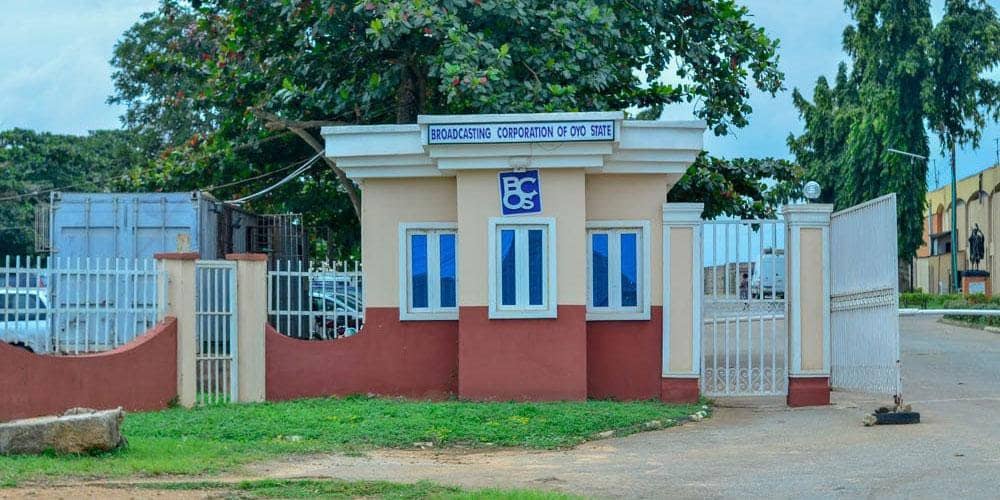

The deteriorating condition of state-owned broadcasting institutions in Oyo State deserves urgent public attention. From the Broadcasting Corporation of Oyo State (BCOS) in Ibadan to Oke-Ogun FM in Alaga and Ajilete FM in Ogbomoso, concerns about operational capacity, infrastructure, staff welfare and sustainable funding raise fundamental questions about the future of public broadcasting under Governor Seyi Makinde’s administration.
These institutions were established to inform, educate and entertain the people, promote indigenous culture and provide accessible platforms for public discourse. They represent more than government-owned communication facilities; they are public assets built to serve generations of residents across Oyo State.
It is therefore troubling that questions continue to arise about their operational condition and ability to fulfil their statutory responsibilities. The Makinde administration must explain what it is doing to address these challenges and demonstrate a clear commitment to preserving the state’s broadcasting heritage.
BCOS: What Happened to the Pride of Oyo State?
BCOS was once a prominent broadcasting institution in the South-West, with a reputation for delivering news, promoting culture and providing a platform for public engagement. Its radio and television services helped connect communities, showcase local talent and communicate developments across the state.
Today, concerns about its facilities, broadcasting equipment and long-term sustainability demand serious attention. At a time when the media industry is rapidly adopting digital technology, BCOS should be positioned to compete through modern equipment, improved transmission capacity, professional development and adequate operational funding.
The government must recognise that a broadcasting institution cannot maintain its relevance on the strength of its history alone. It requires continuous investment, sound management and a clear vision for the future.
Equally important are concerns surrounding allegations that portions of BCOS land may have been allocated or sold for estate development. These allegations require clarification from the relevant authorities. The people of Oyo State deserve to know whether any such transactions took place, the legal basis for them, the parties involved and the benefits, if any, accruing to the state.
Public assets must be managed transparently and in the public interest. If any portion of the corporation’s land has been disposed of, the government should provide the relevant records and explain the circumstances surrounding the transaction. Such clarification would help address public concerns and reinforce accountability in the management of government property.
Oke-Ogun FM and Ajilete FM: Public Broadcasting Beyond Ibadan
The concerns extend beyond BCOS to the state’s zonal broadcasting stations, particularly Oke-Ogun FM in Alaga and Ajilete FM in Ogbomoso.
For the people of Oke-Ogun, Oke-Ogun FM occupies an important position in the communication landscape. The area comprises numerous communities whose residents need reliable access to information about government policies, education, agriculture, healthcare, security and local development.
A functional regional radio station can bridge the communication gap between government and rural communities, particularly where access to other information channels is limited.
However, concerns about Oke-Ogun FM’s operational capacity and the reported poor condition of its staff accommodation raise questions about the attention being given to the station. A broadcasting institution cannot function effectively without reliable transmission equipment, a stable power supply, adequate technical support and a conducive working environment.
The station’s reported dependence on diesel-powered generators also highlights the importance of sustainable funding. Where funds for fuel and routine maintenance are insufficient, broadcasting operations risk becoming irregular, undermining the station’s ability to serve its audience consistently.
Ajilete FM in Ogbomoso similarly deserves an assessment of its facilities, equipment, staffing and operational requirements.
The government should publish a comprehensive assessment of these stations and outline specific measures for addressing their challenges. Residents deserve more than general assurances; they deserve to know what is being done, what resources have been committed and when improvements can reasonably be expected.
Workers’ Welfare Must Be Part of the Solution
Beyond infrastructure and equipment, the welfare of broadcasting personnel must be central to any meaningful revival plan.
Concerns and reports about outstanding salaries, pension obligations and inadequate staff welfare deserve proper investigation and an official response. The government should clarify the position of any outstanding entitlements and explain the measures being taken to protect the interests of serving and retired employees.
Broadcasting depends on skilled professionals, including journalists, presenters, producers, engineers, technicians and administrative personnel. Even the most sophisticated equipment cannot deliver quality programming without competent and motivated staff.
It would therefore be inadequate to define the revival of BCOS and its zonal stations solely in terms of repairing transmitters, purchasing equipment or renovating buildings. Sustainable reform must also include staff training, improved working conditions, appropriate remuneration and respect for employees’ entitlements.
Those who have devoted years to informing and educating the public deserve the institutional support necessary to perform their duties effectively.
From Akala’s Monthly Media Chats to Makinde’s Private Radio Engagements
Another issue that warrants public discussion is the use of state-owned broadcasting institutions for government communication.
During the administration of the late Otunba Adebayo Alao-Akala, monthly media chats on BCOS provided an avenue for government-to-public engagement. Such programmes enabled residents to hear directly from the governor, ask questions about public affairs and follow explanations of government policies.
The practice demonstrated how a state-owned broadcasting institution could serve as a platform for public accountability and direct communication between political leadership and citizens.
Under Governor Makinde, however, I am concerned that private radio stations appear to feature prominently in government media engagements while questions persist about the condition of publicly owned broadcasting institutions.
This observation raises a legitimate question: why has BCOS not been given a similarly prominent role in hosting regular gubernatorial media engagements?
To be clear, there is nothing inherently wrong with a government engaging private broadcasters. Private radio stations reach diverse audiences and can contribute meaningfully to public communication. A government may reasonably use multiple platforms to ensure that its policies and programmes reach as many residents as possible.
The concern is whether the use of private platforms is accompanied by sufficient attention to the public institutions that taxpayers have financed and continue to maintain.
BCOS should not be excluded from meaningful government communication simply because alternative platforms are available. Its inclusion in regular media engagements could help sustain its relevance, strengthen public access to government information and demonstrate the administration’s confidence in the state’s broadcasting infrastructure.
The government should therefore explain its media engagement policy and clarify how it intends to balance the use of private broadcasters with the responsibility to maintain effective public broadcasting institutions.
Public Expenditure and the Responsibility to Strengthen State-Owned Media
The question of government media engagement also raises broader concerns about public expenditure and funding priorities.
If public resources are committed to publicity, media appearances and communication activities, the administration should be transparent about how those expenditures fit into its overall strategy for sustaining state-owned broadcasting institutions.
I am not alleging that funds have been diverted from BCOS or its zonal stations to private broadcasters. Such a claim would require documentary evidence. My concern is that the government should explain its priorities and demonstrate how it is ensuring the long-term viability of the institutions under its control.
A clear policy should address funding for equipment, transmission infrastructure, power supply, maintenance, digital upgrades and staff development. It should also establish measurable objectives against which the public can assess progress.
State-owned broadcasting stations must not be left to struggle with basic operational requirements while their future remains uncertain. They should be treated as strategic public institutions whose value extends beyond the immediate communication needs of any administration.
The Voice of Oyo State Must Not Be Allowed to Fade
BCOS and its zonal stations have the potential to contribute significantly to cultural preservation, public education, community development and democratic participation.
Through programmes in indigenous languages, local news coverage, educational broadcasts and discussions of community concerns, these institutions can give residents a stronger voice in public affairs.
For Oke-Ogun communities in particular, a functional Oke-Ogun FM could provide a platform for discussing local development priorities, communicating government policies and highlighting challenges that might otherwise receive limited attention.
Similarly, Ajilete FM can help strengthen communication with communities across its coverage area, while BCOS can continue to serve as a major source of state-wide information and cultural expression.
The decline of these institutions, if confirmed by an independent assessment, would therefore represent more than an administrative problem. It would raise concerns about the preservation of public assets and the ability of residents to access locally relevant information through publicly owned media.
Oyo State should not allow its broadcasting heritage to lose its relevance when strategic investment, accountable management and a clear rehabilitation plan could provide a path towards renewal.
My Challenge to Governor Makinde
I challenge Governor Seyi Makinde to make the rehabilitation of BCOS, Oke-Ogun FM, Ajilete FM and other state-owned broadcasting facilities a priority before the end of his administration.
First, the government should commission and publish a comprehensive assessment of the operational condition of the stations, identifying their equipment requirements, infrastructure deficiencies, staffing needs and financial obligations.
Second, it should provide a transparent rehabilitation plan with clear priorities, funding arrangements, implementation timelines and measurable targets for improving broadcasting services.
Third, the government should address legitimate concerns about workers’ welfare by clarifying outstanding salary and pension obligations and outlining the steps being taken to resolve any verified arrears.
Fourth, the relevant authorities should clarify allegations concerning the allocation or disposal of BCOS land and make appropriate records available for public scrutiny, subject to applicable laws and legitimate confidentiality requirements.
Finally, the administration should adopt a sustainable funding framework that provides for routine maintenance, reliable power, modern transmission equipment, digital transformation and continuous staff development.
These are reasonable demands concerning public accountability, institutional sustainability and the responsible management of taxpayers’ investments.
The government has a responsibility to ensure that public institutions remain functional and capable of delivering the services for which they were established. Broadcasting stations are no exception.
A Legacy Beyond Political Tenure
The performance of an administration should not be measured exclusively by the projects it initiates or the policies it announces. It should also be assessed by how it maintains existing public institutions, protects public assets and strengthens the systems that future administrations will inherit.
For Governor Makinde, the condition and future of Oyo State’s broadcasting institutions present an important question of public responsibility. Will his administration leave behind a strengthened broadcasting corporation with functional zonal stations, modern equipment and improved working conditions, or will unresolved concerns about their operations persist beyond his tenure?
The answer should be reflected in concrete action, transparent reporting and a commitment to institutional renewal.
My position is straightforward: BCOS, Oke-Ogun FM and Ajilete FM deserve urgent attention, not because they belong to a particular administration, but because they belong to the people of Oyo State.
Their preservation should transcend political differences. Their facilities should be protected, their workers treated fairly, and their operations supported by a funding structure capable of sustaining quality broadcasting.
The people of Oyo State deserve clear answers about the condition of these institutions and a credible plan for their future.
Governor Makinde, the time to act is now. The voice of Oyo State must not be allowed to fade.
David Oluokun
BSA Voice of Reason Media & RHAIN Coordinator