
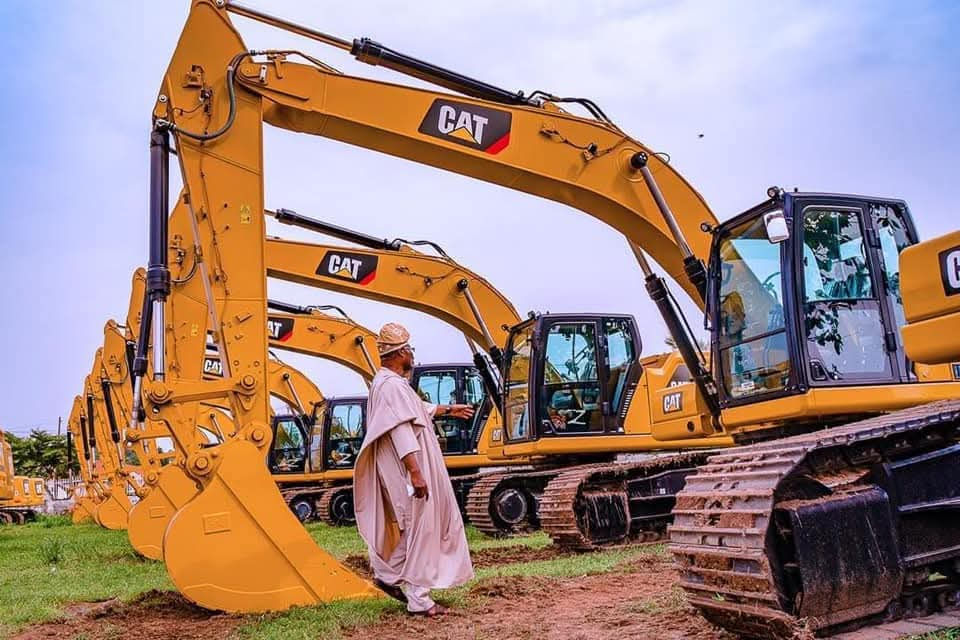

The administration of Oyo State Governor Seyi Makinde has been challenged to clarify allegations surrounding the reported sale of tractors acquired during the administration of the late former governor, Senator Abiola Ajimobi, for agricultural development, amid renewed calls for transparency in the management of public assets and growing political discussions ahead of the 2027 governorship election.
The concerns were raised by David Oluokun, BSA Voice of Reason Media and RHAIN Coordinator, who argued that the alleged disposal of the agricultural equipment as scrap, if established, would raise important questions about the preservation of public investments, the continuity of agricultural policies and the accountability of successive administrations in the state.
Oluokun also questioned whether Hon. Bimbo Adekanbi, who is associated with the outgoing administration and has been linked to discussions surrounding the 2027 governorship election under the platform of the Allied Peoples Movement (APM), would adopt a different approach to public asset management, agricultural development and fiscal transparency if elected governor.
In a commentary examining the implications of the allegation, Oluokun maintained that the issue should not be reduced to political disagreements between supporters of the previous and present administrations, insisting that the people of Oyo State deserve verifiable information about the fate of government-owned equipment acquired with public funds.
He called on the Makinde administration to clarify what happened to the tractors, the circumstances surrounding their alleged disposal, the officials who may have authorised any transaction and the destination of any proceeds realised from the purported sale.
According to him, the public deserves a transparent account of the equipment’s history, condition and eventual disposition, particularly given the strategic role agricultural mechanisation plays in improving food production and supporting rural livelihoods.
Demand for Accountability Over Agricultural Equipment
Oluokun recalled that the tractors were reportedly acquired during the Ajimobi administration to support farmers across Oyo State’s 33 local government areas, with the broader objective of promoting mechanised farming, reducing dependence on manual labour and improving agricultural productivity.
He argued that public investments in agricultural equipment should be protected and maintained beyond the tenure of the administration responsible for their procurement, noting that government assets belong to the people rather than individual officeholders or political parties.
He stressed that if the tractors had deteriorated or become unsuitable for agricultural operations, the government should explain the steps taken to assess their condition, determine whether repairs were feasible and establish the basis for any decision to dispose of them.
Oluokun further argued that any verified disposal of the equipment should be supported by relevant documentation, including asset valuations, authorisation records, sale agreements, the identities of purchasers where disclosure is lawful, and records showing how the proceeds were accounted for.
He maintained that the availability of such information would help establish the facts surrounding the allegation and enable citizens to assess whether the decisions taken were consistent with the principles of responsible public administration.
The commentator also cautioned against treating political allegations as established facts without documentary evidence, urging that the controversy be resolved through verifiable records and an official response from the state government.
He said the relevant authorities should establish how many tractors were originally acquired, how many remained operational when the Makinde administration assumed office, their condition at the time and whether any were subsequently sold, transferred, scrapped or otherwise disposed of.
Such clarification, he argued, would provide a factual basis for determining what happened to the equipment and whether the state’s agricultural mechanisation programme adequately protected the public investment.
Agriculture and the Future of Rural Development
Beyond the immediate controversy, Oluokun emphasised the importance of agricultural mechanisation to the economic development of Oyo State, particularly for rural communities whose livelihoods depend on farming and related commercial activities.
He noted that access to functional agricultural machinery could enable farmers to cultivate larger areas of land, reduce the physical demands of farming, improve operational efficiency and strengthen food production.
According to him, the management of tractors and other agricultural equipment should therefore be considered an important component of the state’s broader agricultural development strategy.
He argued that the disposal of publicly funded machinery, if established, should prompt a comprehensive assessment of the government’s approach to agricultural investment, equipment maintenance and support for smallholder farmers.
Oluokun also urged the state government to provide information about the current condition of its agricultural machinery, the availability of equipment to farmers and the measures being implemented to sustain agricultural productivity.
He maintained that agricultural development should not be judged solely by the announcement of projects or the procurement of equipment but also by the ability of successive administrations to maintain public investments and ensure that intended beneficiaries continue to derive value from them.
For him, the central issue is whether government expenditure on agriculture translates into measurable benefits for farmers and the wider population.
2027: Adekanbi Faces Questions Over Policy Continuity
With political discussions surrounding the 2027 Oyo State governorship election gaining momentum, Oluokun has challenged Bimbo Adekanbi to explain how his proposed administration would approach public asset management and agricultural development.
He argued that anyone seeking to succeed an incumbent governor should be prepared to articulate an independent policy direction, address concerns arising from the outgoing administration and explain which existing policies would be retained, modified or discontinued.
Oluokun said Adekanbi should clarify his position on the management of government property, the protection of public investments, transparency in government transactions and the development of a sustainable agricultural mechanisation programme.
He raised questions about whether a future administration led by Adekanbi would undertake a comprehensive audit of government-owned agricultural equipment, establish a transparent asset-tracking system and publish periodic reports on the utilisation and condition of public machinery.
He also asked whether the prospective administration would prioritise the rehabilitation of existing equipment, the replacement of obsolete machinery and the procurement of additional agricultural assets where necessary.
According to Oluokun, these are practical policy questions that require specific answers rather than broad political assurances.
He maintained that Adekanbi’s association with the outgoing administration should not automatically be interpreted as evidence that he would reproduce every existing policy. However, he argued that voters are entitled to understand the extent of his alignment with the government’s record and the changes he would introduce if elected.
Oluokun stressed that the same standard of scrutiny should apply to all governorship aspirants, irrespective of their political affiliations.
He said the electorate should be able to assess candidates based on their policy proposals, commitment to transparency, understanding of the state’s development challenges and willingness to accept responsibility for decisions taken under their leadership.
APM’s Political Identity and the Question of Continuity
Oluokun also examined the implications of Adekanbi’s reported alignment with the Allied Peoples Movement, arguing that the party’s policy direction and relationship with the current administration should be clearly explained to the electorate.
He maintained that the political platform on which a candidate contests an election is important, but that its significance ultimately depends on the quality of its manifesto, the credibility of its commitments and the practicality of its proposed solutions.
According to him, voters should expect a clear programme covering agriculture, education, healthcare, infrastructure, employment generation, public finance and other sectors critical to the development of Oyo State.
He argued that if the APM presents itself as a platform for policy continuity, it should identify the programmes it intends to preserve and explain how it would address concerns about their implementation.
Conversely, if the party intends to pursue a different development direction, Oluokun said it should outline the proposed reforms, explain their funding arrangements and identify the mechanisms through which their implementation would be monitored.
He also questioned the extent to which the expression Omituntun 3.0, associated with the prospect of continuing Makinde’s political agenda, would translate into specific policies and measurable development outcomes.
Oluokun maintained that political slogans and campaign branding should not replace detailed policy commitments, particularly in areas involving public expenditure, agricultural development and the management of state-owned assets.
He argued that the electorate needs to know not only what a candidate promises to do but also how the proposed programmes would be financed, implemented and evaluated.
Public Debt, Expenditure and Asset Management Under Scrutiny
The commentator further extended his concerns to the broader issues of public borrowing, government expenditure and the management of state-owned property.
He argued that borrowing should be assessed according to its purpose, financial implications, repayment obligations and expected benefits, rather than being automatically characterised as evidence of fiscal irresponsibility.
Similarly, he noted that the sale or disposal of public assets is not, in itself, proof of wrongdoing, provided the transaction is properly authorised, transparently conducted and supported by a legitimate public interest.
However, Oluokun maintained that citizens should have access to sufficient information to evaluate the circumstances surrounding major financial decisions.
He argued that where governments obtain loans, they should explain how the funds are deployed, which projects they finance, the obligations incurred and the anticipated benefits to the population.
Likewise, where public assets are disposed of, he said the government should provide a clear account of the reasons for the decision, the valuation process, the authorisation granted and the proceeds realised.
According to him, transparent reporting would strengthen public confidence, improve institutional accountability and reduce the possibility of public resources being managed without adequate scrutiny.
Oluokun insisted that these standards should apply consistently, regardless of which political party controls the state government.
He therefore called on the Makinde administration to address the allegation concerning the Ajimobi-era tractors through verifiable documentation and an official explanation, rather than allowing the issue to remain unresolved amid political exchanges.
He also urged Adekanbi to use the controversy as an opportunity to outline his position on public asset protection, agricultural investment and responsible fiscal management.
The Need for Evidence-Based Political Debate
Oluokun cautioned that the allegation concerning the tractors should not be treated as an established fact until the relevant records are examined and the state government has had an opportunity to respond.
He argued that responsible public discourse requires a distinction between allegations, verifiable evidence and conclusions supported by established facts.
Nevertheless, he maintained that the questions raised by the controversy were sufficiently important to warrant clarification, given the potential implications for agricultural development and the management of public resources.
He identified the central issues as the number of tractors acquired, their operational condition, the circumstances surrounding any subsequent disposal, the authorisation for such transactions and the accounting of any proceeds.
He also called for clarification on the safeguards available to protect other government-owned assets against neglect, deterioration, unauthorised transfers or improper disposal.
According to him, the government’s response would help the public understand the circumstances surrounding the equipment and determine whether improvements in asset management are necessary.
Oluokun further maintained that Adekanbi should explain what his candidacy would represent beyond his political association with the outgoing governor.
He argued that the 2027 governorship election should provide an opportunity for candidates to present detailed proposals on agricultural development, public finance, infrastructure, social services and institutional accountability.
He said the electorate should be able to compare candidates based on clear policy differences, realistic commitments and credible plans for implementation.
Oyo Residents Deserve Answers Ahead of 2027
Oluokun concluded that the controversy surrounding the alleged sale of Ajimobi-era tractors as scrap should be addressed through transparency, documentary evidence and accountability.
He reiterated that the Makinde administration should clarify the fate of the equipment, while Adekanbi should explain how he intends to approach the management of public assets and agricultural investment if he eventually secures the mandate to lead the state.
He maintained that the central issue extends beyond the political fortunes of individual officeholders, touching instead on the responsibility of government to preserve public resources and ensure that public expenditure delivers tangible benefits.
For Oluokun, the controversy also presents an opportunity to broaden the political debate ahead of 2027, encouraging candidates and political parties to move beyond campaign rhetoric and demonstrate how their proposed policies would improve the lives of residents.
He argued that a credible development agenda should include transparent asset management, effective agricultural support systems, prudent public spending and mechanisms that enable citizens to monitor government performance.
Ultimately, he maintained that the people of Oyo State deserve clear answers about the fate of the tractors, just as they deserve concrete commitments from those seeking to govern them.
The question, he argued, is not merely whether the allegation against the present administration can be substantiated, but also what lessons would be drawn from the findings and what safeguards would be introduced to prevent the recurrence of any established shortcomings.
“If the allegation concerning the tractors is substantiated, what lessons will the Makinde administration draw from it, and what concrete assurances will Bimbo Adekanbi offer that public assets will be managed transparently under any government he seeks to lead?” Oluokun asked.
He maintained that both the outgoing administration and those seeking to succeed it should be prepared to address these concerns as the state approaches another critical electoral cycle.
David Oluokun
BSA Voice of Reason Media & RHAIN Coordinator