
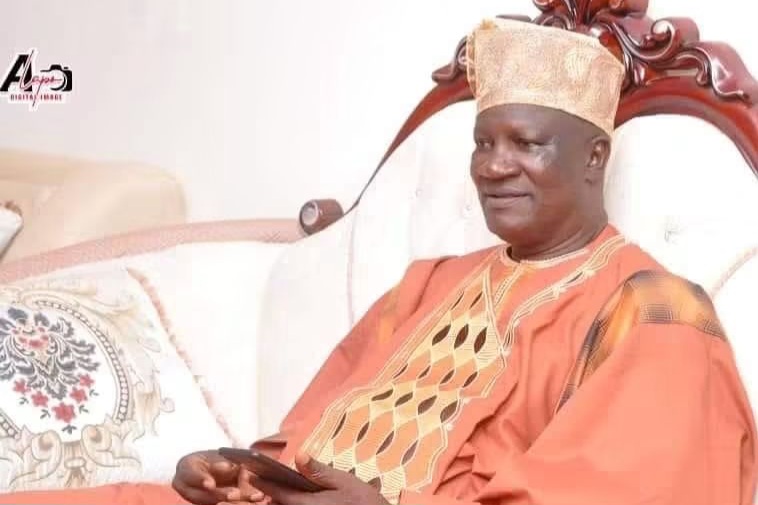

The Chairman of the Oyo State Pension Board, Hon. Rafiu Adekunle, has examined Nigeria’s experiences under the regional parliamentary and presidential systems of government, arguing that the country’s political history offers important lessons on governance, development, representation and the distribution of political power.
Adekunle, in a detailed reflection titled “Regional and Presidential Systems of Government: Nigeria as a Case Study,” traced the evolution of Nigeria’s political structure from independence, highlighting the strengths and shortcomings of the systems that have shaped the country’s democratic journey.
According to him, a system of government defines how political authority is organised, exercised and distributed within a state, adding that Nigeria’s experience provides a significant case study of how the relationship between the central government and constituent units can influence development and national cohesion.
He recalled that Nigeria operated a parliamentary system within a federal structure at independence in 1960, with the country initially comprising the Northern, Western and Eastern Regions, while the Mid-Western Region was created in 1963.
Adekunle noted that the regions enjoyed considerable autonomy under the arrangement, with each region having its own legislature and government headed by a Premier. At the federal level, the Prime Minister served as head of government, while the Governor-General represented the Crown until Nigeria became a republic in 1963.
He observed that the regional structure provided room for the different parts of the country to formulate policies that reflected their respective social, economic and cultural realities.
Regional autonomy and development
The Oyo Pension Board chairman identified greater regional autonomy as one of the notable advantages of the First Republic arrangement.
He explained that the regions exercised substantial control over their resources and development policies, giving them the opportunity to determine priorities according to the needs of their people.
According to him, the system also encouraged competition among the regions, particularly in education, agriculture and infrastructure.
Adekunle cited the Western Region as an example of how regional autonomy could be deployed to pursue ambitious development policies, particularly in the area of education.
He further argued that regional governments, being closer to the people, were potentially better positioned to identify and respond to local needs.
Beyond development, he said the regional system also accommodated Nigeria’s diversity by recognising the distinct political, social and cultural identities of the various regions instead of concentrating virtually all political power at the federal centre.
However, Adekunle acknowledged that the regional arrangement was not without significant shortcomings.
He noted that regional politics sometimes intensified ethnic and sectional competition, while political parties became closely associated with particular regions.
According to him, electoral disputes and political crises subsequently created tensions between regional interests and broader national interests, thereby weakening national cohesion.
“The regional system had substantial advantages, but its political challenges also contributed to the instability that preceded the military coup of 1966,” he stated.
He explained that following the military takeover, Nigeria’s regional structure was progressively replaced with a state-based federal arrangement, beginning with the creation of 12 states in 1967.
Turning to Nigeria’s presidential system, Adekunle noted that the country adopted the model in 1979, drawing substantially from the United States presidential structure.
He added that after subsequent periods of military rule, presidential democracy returned with the commencement of the Fourth Republic on May 29, 1999.

Under the presidential arrangement, he explained, the President serves simultaneously as Head of State and Head of Government and is elected separately from members of the National Assembly.
He further noted that the President appoints ministers to assist in administering the executive branch, while constitutional powers are distributed between the Federal Government and the states under Nigeria’s federal structure.
Adekunle identified separation of powers among the Executive, Legislature and Judiciary as one of the fundamental features of the presidential system.
He explained that the National Assembly, comprising the Senate and House of Representatives, performs legislative and oversight responsibilities, while the judiciary is constitutionally positioned to interpret laws and adjudicate disputes.
He also identified federalism, fixed tenure and checks and balances as other major characteristics of the system.
According to him, the constitutional arrangement provides for elected presidents and governors to ordinarily serve four-year terms, subject to constitutional limitations, while the legislature and judiciary are designed to serve as checks on executive authority.
Comparing the two systems, Adekunle observed that the regional parliamentary model traditionally placed Parliament at the centre of government, with a Prime Minister serving as Head of Government and the executive emerging from the legislature.
The presidential system, by contrast, places an elected President at the centre of the executive branch, with the President serving as both Head of State and Head of Government and being elected separately from the legislature.
He noted that the First Republic’s regional structure gave considerable autonomy to the regions, with Premiers leading the regional governments, whereas the present presidential arrangement operates through the Federal Government and 36 state governments headed by elected governors.
Adekunle further observed that the parliamentary model produced a closer relationship between the executive and legislature, while the presidential model places greater constitutional emphasis on separation between the two branches.
He added that political identities under the regional arrangement were strongly influenced by regional affiliations, whereas contemporary national institutions have assumed greater prominence under the presidential structure.
Addressing the question of which system is more suitable for Nigeria, Adekunle cautioned against providing a simplistic answer.
He argued that both systems possess advantages and weaknesses and that Nigeria’s political circumstances must be carefully considered when evaluating either model.
According to him, the regional system demonstrated the potential benefits of local autonomy, competition and policies tailored to specific communities and regions.
However, he acknowledged that the same structure could encourage sectional politics and deepen divisions if national institutions and interests were not sufficiently strengthened.
On the other hand, he noted that the presidential system provides a stronger national political structure, clearer separation of powers and a direct electoral mandate for the President.
Nevertheless, Adekunle’s analysis suggests that the effectiveness of a system of government should not be judged solely by its constitutional label but also by the quality of leadership, strength of institutions, accountability, resource distribution and commitment to the welfare of citizens.

Adekunle’s examination of the two systems ultimately points to the need for Nigeria to draw lessons from its political history rather than viewing either model through a purely partisan or ideological lens.
He maintained that the regional experience demonstrated the importance of allowing constituent units sufficient room to pursue development according to their peculiar circumstances, while the presidential system offers institutional mechanisms intended to promote national coordination, separation of powers and checks and balances.
For Nigeria, he implied, the central challenge is how to build a system that combines effective national coordination with meaningful subnational autonomy and responsive governance.
The debate, therefore, extends beyond whether Nigeria should return to the regional system or retain the presidential model. It also raises broader questions about fiscal federalism, resource control, political accountability, institutional independence, equitable representation and the capacity of governments at all levels to deliver development.
Adekunle’s contribution adds to the continuing national conversation on how Nigeria can strengthen its democratic institutions and evolve a governance structure capable of accommodating the country’s diversity while promoting unity, stability and sustainable development.